Distilled Spirits
Specialty Ingredient Solutions
Distilled Spirits Product Line
- Bentonite – Vitiben
- Calcium Chloride
- Citric Acid FCC
- Cream of Tartar
- Decolorizing Carbon
- Deodorizing Carbon
- Dextrose
- Flavorings (Fruit & Spice)
- Fumaric Acid
- Lactic Acid
- Malic Acid
- Magnesium Sulfate (Epsom Salt)
- Phosphoric Acid 75% FG
- Potassium Bicarbonate
- Potassium Carbonate
- Potassium Metabisulfite
- Potassium Sorbate
- Propylene Glycol USP
- Propylene Glycol USP Inhibited
- Sodium Benzoate
- Sodium Bicarbonate USP # 1
- Sodium Metabisulfite
- Tartaric Acid (Natural)
Spirits 101
What is distillation?
Why do we have to distill hard liquor? To create anything substantially “hard,” we can’t rely on yeast. To get high ABV alcohol, we have to actually physically separate alcohol from water using evaporation and condensation—aka distilling.
Because alcohol has a lower boiling point than water (173 F vs. 212 F), distillers can evaporate the alcohol (mostly) by itself, collect the vapors into a tube and use cold temperatures to force the alcohol to condense back into liquid. In all of drinking history, just two methods of distilling have evolved.
However you are distilling, alcohol never evaporates alone. Congeners (tannins, esters, fusel alcohols, and even methanol) can evaporate with it. Cutting is the process by which the distiller separates out these elements, usually through careful temperature and timing control.
Need more information?
Most products have samples available to ensure you are ordering the correct product for your needs, our experienced fermented beverage technical team can help guide you on all phases of your formulation needs.
For more product information, you can also request literature or contact us if you need additional information.
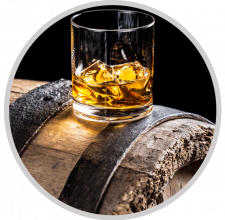
Distilled Spirits
Free Consultation
Ravago Chemicals will work with you through every stage of the process to realize your project goals. Complete the form below for a free sample and quotation.